Tough Break
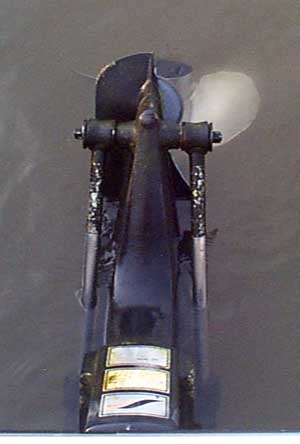
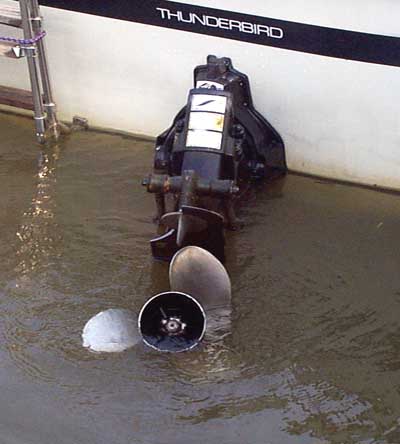
The summer of 2004 was fairly uneventful. The new cover kept the interior of the boat dry through all the summer rain showers and we did the usual boating things, riding, tubing, and so on. Gordon and I took a trip into Charleston during the annual sternwheel regatta. Other than that it was mostly short trips. On one of those short rides in late September, we hit a small branch floating on the water. I didn't see it in time to avoid it and I grimaced when I heard two thumps as it passed under us. Nothing seemed amiss, so we continued on our way, but after we got back home I was standing on the dock and noticed that a big hunk of the anti-ventilation plate on my outdrive was gone.
Since it didn't have any noticeable effect on performance, and there wasn't much boating season left anyway, I didn't do anything about it other than make sure the prop wasn't damaged and check to see if the trim tab anode was as precarious as it looked. (It wasn't.)
After a few weeks, the weather was turning bad, so I took the boat out of the water. It had been raining and the current was stronger than usual, making it harder than usual to get the boat on the trailer. I ended up having to toss a line to Laura on the ramp so she could keep the back end of the boat from drifting downstream while I got the front end positioned on the trailer's bunk boards.
I removed lower end of the outdrive and took it to Charleston Marine, and two days and $200 later, it was almost as good as new. Their welder stuck a new piece on to replace what I knocked off. The trim anode doesn't seat quite as nicely as it did on the original. I did a little filing on the mating surfaces, but couldn't get it to the point where the round part fit perfectly flush in the recess in the anti-cavitation plate like it used to. It's close enough, though, and I don't think anyone else will ever notice.
I replaced the water pump impeller while I had the lower unit off, even though the one that was in it would have easily lasted another year. Maybe if I'm lucky I'll get through next season without having to take the drive apart again.
Poking around on the Formula Boats web site, I found that they've added a "vintage Formula" section, with copies of brochures going back quite a few years. I found my boat in the 1977 catalog:
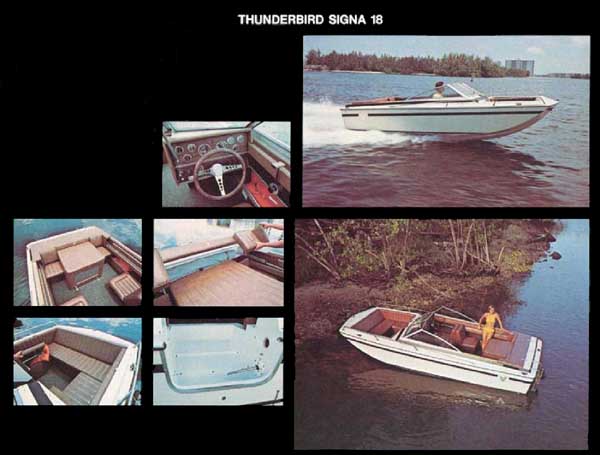
That's apparently the outboard version in that middle picture at the bottom. Here are the specs from the brochure:
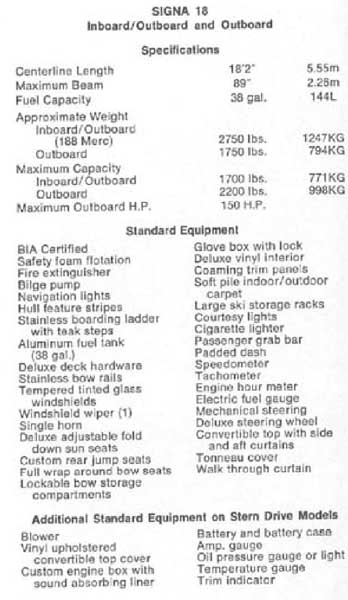
At 2750 pounds, she's a little heavier than I had initially estimated. (No wonder my truck struggled to get up the ramp.) And the fuel capacity is now confirmed. The second number on the tank label in the boat is partially obscured and I could never tell for sure if it was a 3, 6, or 8.